

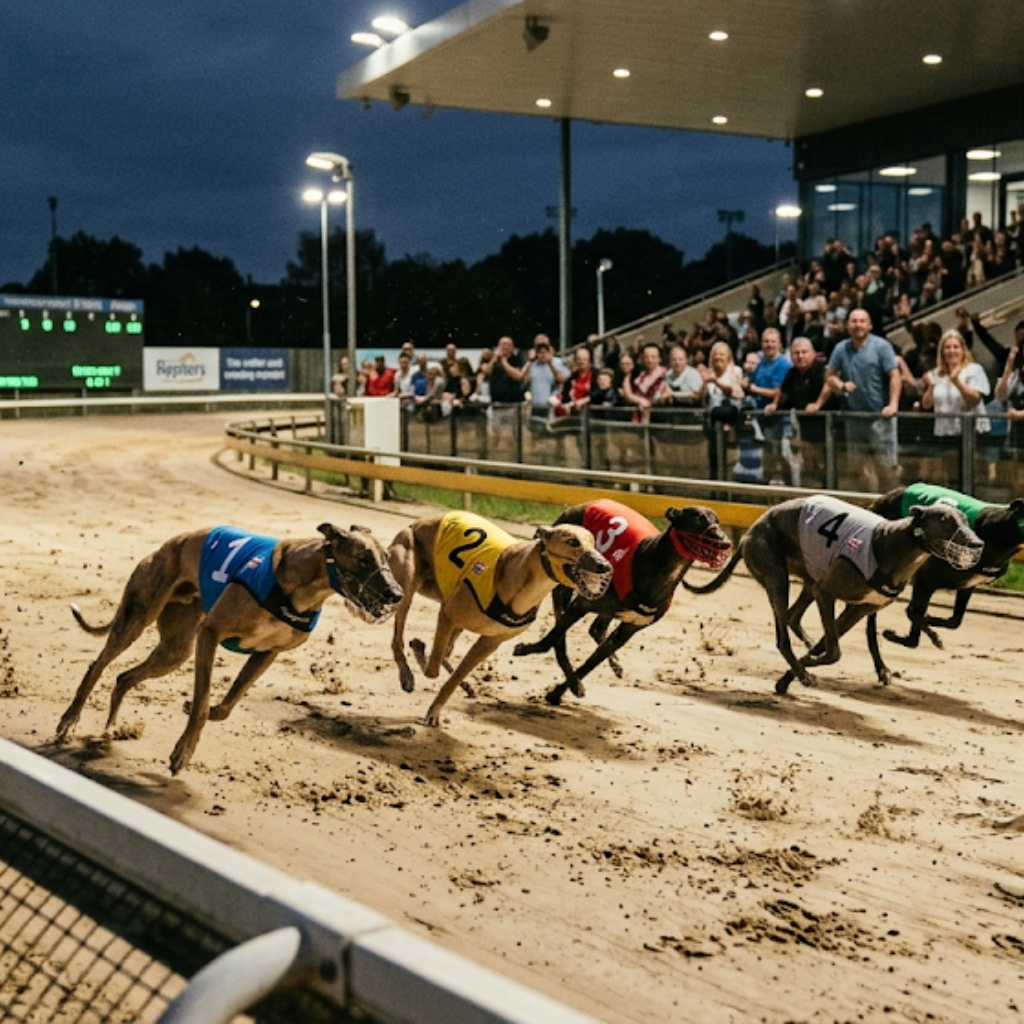
Greyhound racing is one of the most thrilling, fast-paced sports in the global wagering market. Within a span of roughly 30 seconds, six powerful athletes sprint down the track in pursuit of a mechanical hare, offering an intense spectacle where single milliseconds separate winners from losers. Because of this blistering speed, casual punters often view the dogs as a game of pure luck. However, systematic bettors know that greyhound racing is highly analytical.
When searching through the best betting sites in India, you will find deep markets covering major tracks across the UK, Ireland, and Australia. To consistently make smart predictions rather than relying on guesswork, you need to understand how to read a race card and apply proven technical angles. This comprehensive guide covers the top greyhound racing betting tips and strategies to help you uncover value when using online bookies in India.
The Anatomy of a Greyhound Race: Key Indicators
Before risking your bankroll, you must learn to read the “Race Card”—the statistical breakdown provided by sportsbooks for every runner in a race. Successful greyhound strategy relies on analyzing three core metrics:
- Split Times (The Early Pace): The split time is the exact number of seconds it takes for a dog to cross the initial tracking beam from the moment the traps open. In greyhound racing, the first bend is where most trouble occurs. A dog with an exceptionally fast split time can burn ahead of the pack, clear the traffic, and secure an unobstructed path on the inside rail.
- The Racing Grade (Class): Races are strictly categorized by letter and number grades (e.g., A1 down to A11 for standard races, or OR for Open Races). An A1 race features elite graders, while an A11 features lower-tier runners. Pay close attention to dogs moving up or down in grade. A dog that struggled in an A3 race might completely dominate the moment it drops into an A4 pack.
- Age vs. Fatigue: Young greyhounds (under 2 years old) are highly progressive; they lack seasoned racing intelligence but often improve their personal best times with every consecutive run. Conversely, older dogs (over 3.5 years old) are experienced and reliable but may carry fatigue if they have run too many high-intensity races in a short period.
Core Greyhound Betting Strategies for 2026
To lock in consistent value across online bookmakers, professional handicappers steer clear of blindly backing the pre-race favorite. Instead, they implement structured frameworks to find value gaps in the market.
1. The Trap Bias and Draw Analysis
Every greyhound has an inherent running style. Some are “Railers” (they naturally turn sharply left to hug the inner fence), some are “Middle” runners, and others are “Wide Seeded” (they drift to the outer edges of the track on bends).
+------------+--------------------+---------------------------------------+
| Trap Group | Running Style      | Best Conditions                       |
+------------+--------------------+---------------------------------------+
| Traps 1-2  | Railers            | Clean starters who hug the inner fence|
| Traps 3-4  | Middle Runners     | Strong dogs that avoid rail traffic   |
| Traps 5-6  | Wide Seeded        | High-stamina dogs passing on the outside|
+------------+--------------------+---------------------------------------+
Always compare a dog’s natural running style to the trap number it has drawn for the day. For example, if a heavy “Railer” draws Trap 4, and there is an exceptionally fast starter in Trap 3, the dog in Trap 4 will likely try to cut left at the start, collide with the field, and get “boxed in.” The ultimate value bet is finding a Railer sitting comfortably in Trap 1 with slower-breaking dogs in Traps 2 and 3.
2. The Weather and Track Biases
Weather changes track dynamics instantly. In 2026, most top-tier greyhound events take place on specialized all-weather sand tracks. However, heavy rain can drastically alter how the surface behaves.
When a downpour occurs, the outer parts of the track often dry faster or drain differently than the inside lane, shifting the advantage to wider traps (Traps 5 and 6). Furthermore, heavy, muddy tracks place an intense premium on raw muscle and stamina. On wet days, favor heavier, stronger dogs over lighter sprint specialists who rely entirely on clean, dry footing to establish early acceleration.
3. Exotic Vertical Wagers (Forecasts & Tricasts)
Because a standard greyhound field is strictly limited to six runners, picking a single winner can offer lower decimal odds on short-priced favorites. To counter this, seasoned bettors rely on Exotic Vertical Markets:
- Straight Forecast: You must accurately predict the 1st and 2nd place finishers in the exact order.
- Reverse Forecast: You pick two dogs to finish 1st and 2nd in any order. This counts as two separate bets.
- Combination Tricast: You select three dogs to fill the top three positions in any order. This involves 6 distinct combinations.
If your analysis reveals that the dogs in Trap 1 and Trap 2 have vastly superior split times and will completely clear the field on the first bend, placing a Reverse Forecast on Traps 1 & 2 can yield a massively higher return than simply placing a straight win bet on either favorite.