

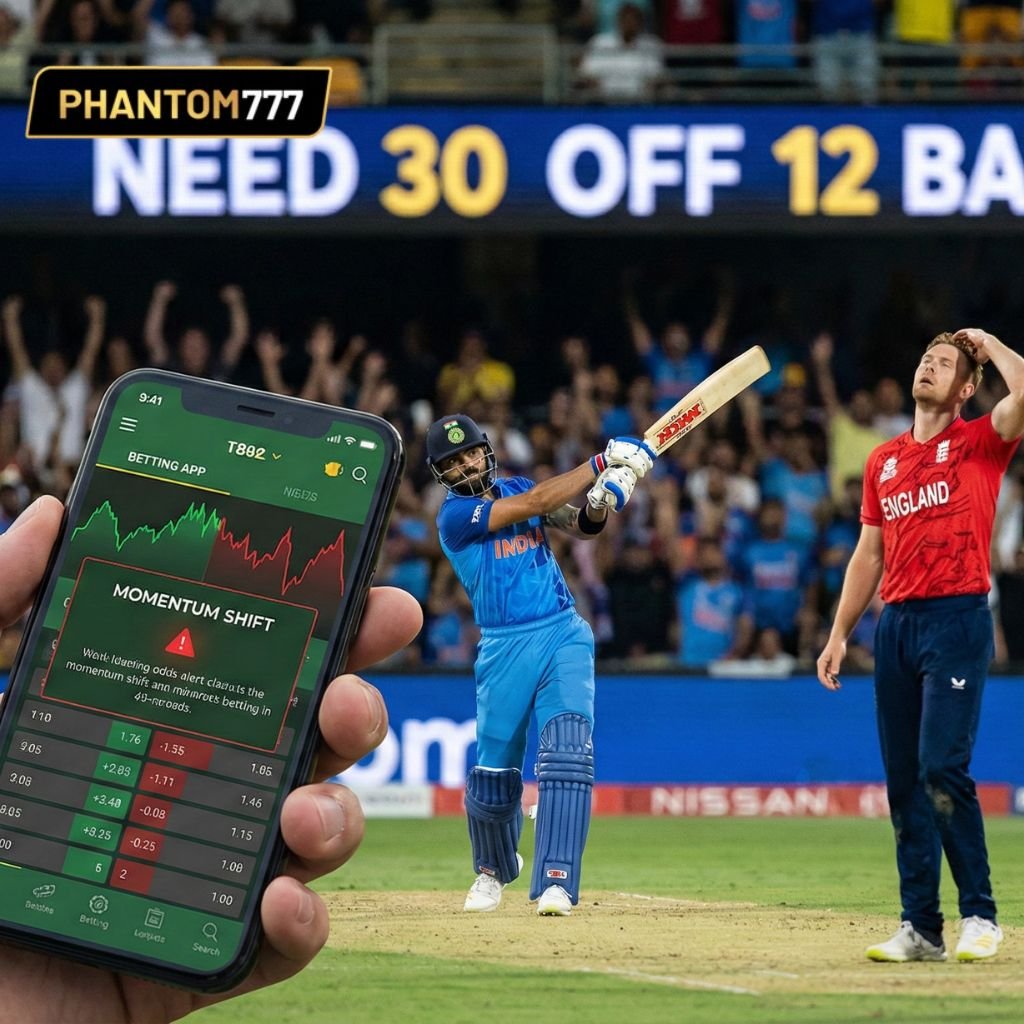
T20 cricket is arguably the most volatile sport in the world to bet on because the narrative of the game can flip entirely in the span of just six balls. If you have ever watched a match where a team looked dead and buried only to hit twenty runs in an over and suddenly become the favorites, you know precisely what momentum feels like. For a live bettor, capturing this invisible energy is far more profitable than staring at a spreadsheet of historical stats. The art of live betting isn’t about predicting who will win before the toss; it is about recognizing the shift in power before the bookmakers adjust their odds.
The most common mistake novice bettors make is reacting to what has just happened rather than anticipating what is about to happen. For instance, if a team loses two quick wickets in the powerplay, the casual punter instantly writes them off and backs the fielding side. However, a seasoned reader of momentum looks at the crease. If the incoming batter is an aggressive player who likes pace, and the fielding captain has just brought on a spinner to attack, the momentum is ripe for a counter attack. This is often the moment where the odds for the batting team are at their highest, offering incredible value for someone brave enough to back the recovery before it actually starts.
You also have to understand the rhythm of the innings, specifically the trap of the middle overs. We often see a team fly out of the blocks, scoring sixty or seventy runs in the powerplay without losing a wicket. The momentum feels unstoppable, and the live odds usually crash, making the batting team heavy favorites. But experienced traders know that as soon as the field spreads out in the seventh over, the boundaries dry up. Spinners come into operation, and the strike rotation becomes key. This is a classic momentum breaker. Betting against the run of play here predicting a dip in the scoring rate or a session Under bet is often safer than assuming the carnage will continue for twenty overs.
Another subtle but powerful momentum indicator is the body language of the fielding captain and the bowler. Momentum feeds on panic. When a bowler starts arguing with the umpire about a wide call, or a captain starts aggressively moving fielders after every single delivery, it is a sign that the fielding team is rattled. In cricket, a rattled team bowls loose deliveries. If you see shoulders dropping or visible frustration on the field, the momentum has decisively shifted to the batting side, regardless of what the required run rate says. This is usually the time to back the batting side to score big in the next few overs.
We also cannot ignore the psychological impact of the strategic timeout. It sounds trivial, but that two and a half minute break is a massive momentum killer. How many times have we seen a batter smashing the ball to all parts of the ground, only to lose their wicket the very first ball after the timeout? The break disrupts concentration and allows the bowling team to reset their plans. If a team is on a rampage, placing a bet right before the timeout is risky. It is often wiser to wait and see if the rhythm has been broken. Conversely, if a batting team is struggling, that break often allows them to regroup and come out with a fresh, aggressive intent.
Finally, you have to factor in the conditions, specifically the dew factor in night matches, which acts as an artificial momentum shifter. In the second innings, if the dew sets in, the ball starts skidding onto the bat nicely, and bowlers struggle to grip the ball. This neutralizes the bowling team’s skill. Even if the required rate is high, say twelve or thirteen runs per over, the presence of dew shifts the momentum advantage to the batting side. Bookmakers’ algorithms sometimes struggle to quantify precisely how wet the ball is, but you can see it on the screen. If the fielders are constantly wiping the ball with towels, the momentum is with the chaser, and the high odds on them winning might be a bluff worth calling.
Success in live T20 betting comes down to watching the game with your eyes rather than just watching the numbers. It is about feeling the pressure build up with three dot balls in a row and knowing a big shot or a wicket is inevitable. It is about understanding that momentum is a wave, and the goal is to surf it just as it begins to rise, not after it has already crashed.