

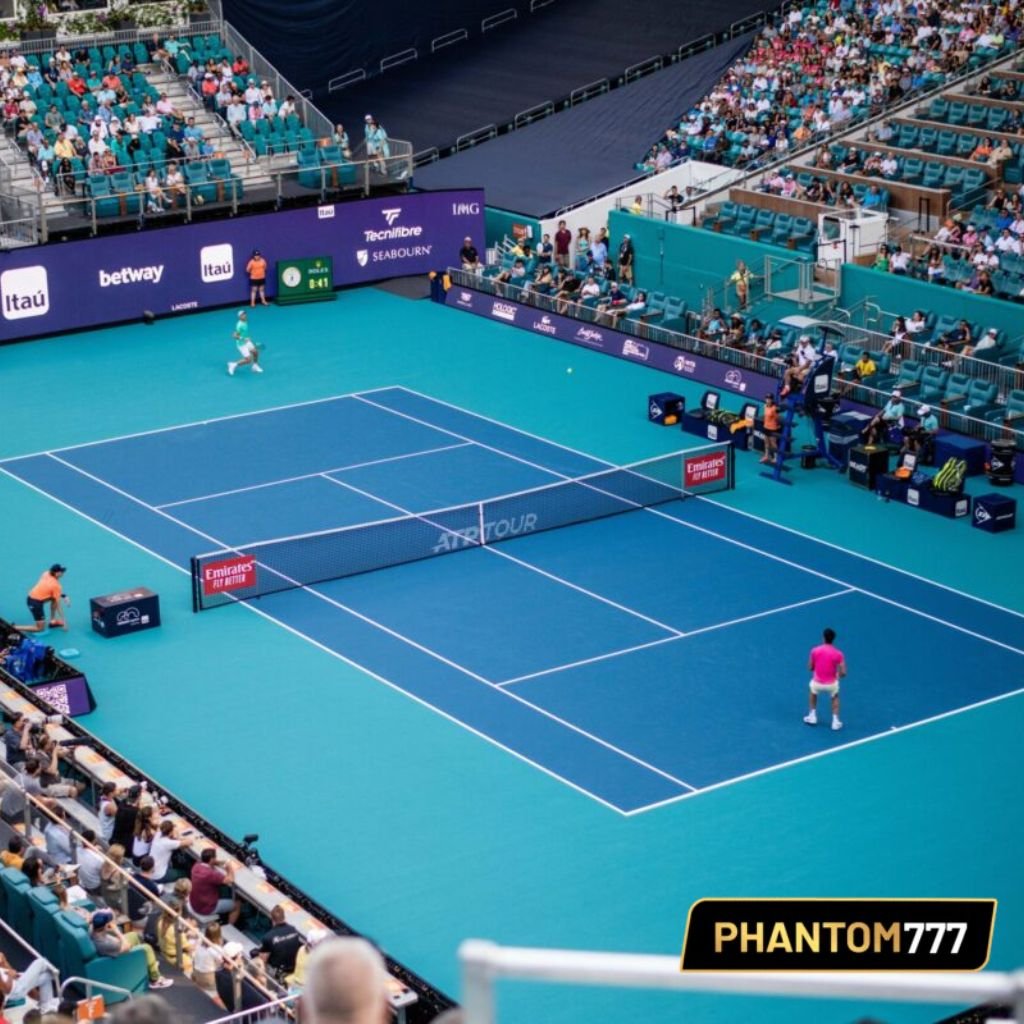
Betting on tennis offers a unique thrill because, unlike team sports, the outcome rests entirely on the shoulders of two individuals. Whether you are following the power-hitting dominant forces of the ATP or the tactical, high-variance battles of the WTA, success requires more than just picking a favourite. To find consistent value, you must understand the nuances of surface specialized play, psychological momentum, and the distinct differences between the men’s and women’s circuits.
Analyzing Surface Specialization
One of the most critical factors in tennis betting is the court surface. Tennis is played on clay, grass, and various types of hard courts, each demanding a different skill set. Clay courts slow the ball down and produce a higher bounce, favouring grinders who have the fitness for long rallies and heavy topspin. Conversely, grass courts are lightning-fast with low bounces, favouring big servers and players comfortable with serve and volley tactics. Before placing a wager, always verify a player’s win-loss record on that specific surface rather than looking at their overall rank. A top-10 player who excels on hard courts can easily be upset by a clay-court specialist during the French Open swing.
The Divergence of ATP and WTA Dynamics
Strategic bettors treat the ATP and WTA as two different sports. In ATP matches, especially those featuring top-tier players, the serve is a dominant weapon. Hold of serve percentages are generally high, making over bets on total games more viable. In contrast, the WTA circuit often sees more frequent breaks of serve. This volatility makes the WTA an excellent arena for Live Betting. If a favourite loses her serve early in a set, the odds often shift dramatically, providing a high-value opportunity to back a comeback, as momentum swings are much more common in women’s matches.
Situational and Psychological Factors
Beyond physical stats, the psychological state of a player is paramount. Tennis players travel across time zones weekly, and fatigue or lack of motivation can lead to unexpected upsets, particularly in smaller ATP 250 tournaments following a Grand Slam. Look for Let-down Spots, where a player who just achieved a massive career milestone might lack the intensity for a routine early-round match just days later. Additionally, head-to-head records, often called matchup nightmares, can reveal psychological edges. Some players simply struggle against specific styles, such as a left-handed slice or a relentless defensive baseliner, regardless of their superior ranking.
Advanced Value Hunting
To move beyond basic match-winner bets, successful strategists look at Set Betting and Game Handicaps. If a heavy favourite is priced too low to offer value, betting on them to win 2-0 in sets can provide a better return. Similarly, if you believe an underdog will lose but keep the match competitive, a +4.5 Game Handicap allows you to win your bet even if the underdog loses the actual match. By diversifying your betting types and focusing on the underlying metrics like first-serve percentage and break-point conversion, you can turn a casual hobby into a disciplined, data-driven strategy.
FAQs:
Q: Is there a difference between betting on ATP (Men) and WTA (Women)?
A: Yes, they require very different strategies. In ATP matches, the serve is often dominant, leading to more “holds” and higher game totals. In the WTA, breaks of serve are much more frequent, making live betting on momentum swings a highly effective strategy.
Q: How much does the court surface actually matter?
A: It is one of the most decisive factors in tennis betting. A player’s rank can be misleading if they are playing on a surface they dislike. For example, grinders thrive on the high-bounce, slow-speed clay of the French Open, while big servers dominate on the fast, low-bounce grass of Wimbledon.
Q: What is a “Let-down Spot” in tennis betting?
A: A let-down spot occurs when a player has just achieved a major emotional or physical milestone, such as winning a career-first title or an exhausting five-set thriller. In their next match, they often suffer from a drop in intensity or physical fatigue, making them vulnerable to an upset by a lower-ranked opponent.
Q: Why should I look at head-to-head (H2H) records instead of just rankings?
A: Rankings show general skill, but H2H records reveal matchup nightmares. Some top players struggle against specific styles—like a heavy left-handed slice or a relentless defensive baseliner meaning an underdog can have a psychological and tactical edge regardless of their lower ranking.
Q: What is the benefit of Game Handicap betting?
A: Game handicaps allow you to win a bet even if your chosen player loses the match. For instance, if you back an underdog with a +4.5 game handicap, you win as long as they keep the score competitive, providing a safety net against superior opponents.